
Historical and Folklore Museum of Kalamata
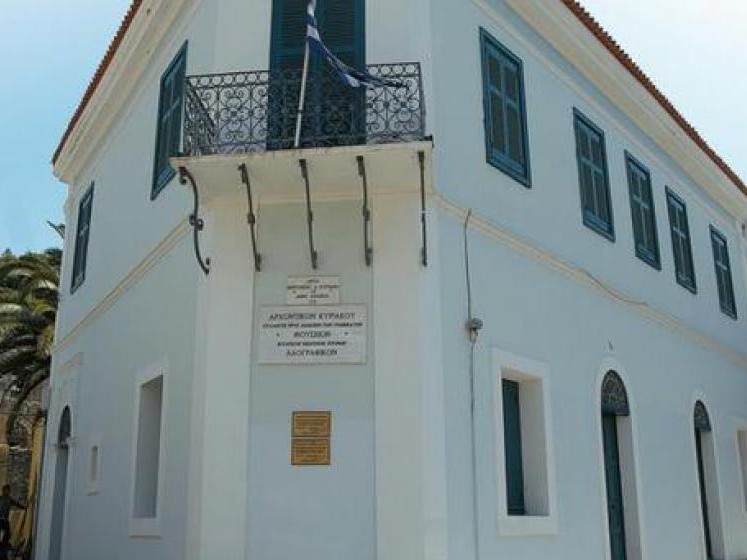
A beautiful museum which is housed in a two-story, neoclassical building which was donated by the Kyriakou family to the Municipality of Kalamata. During the tour, the visitor has the opportunity to admire various exhibits related to the Kyriakou family, old photographs of the city and 19th century copper engravings. The ground floor presents the way of life in Messinia during the pre-industrial era while on the first floor there is a section dedicated to bookbinding and printing. Telephone +30 27210 28449 Opening Hours Daily: 09:00 – 13:00 Monday – Tuesday: CLOSED
Castle of Androusa
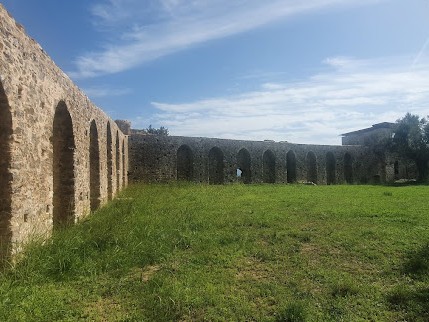
The castle of Androusa is located about 20 kilometers from Kalamata and was built by the Prince of Achaia and Baron of Kalamata William II Villardouino sometime after 1250.
This long-suffering castle passed into many different hands and today only the ruins of its callus are preserved, such as a series of walls with a length of up to 500 meters and a width of about 1.5m, as well as the cannons and the watchtower as well as four of its towers: one circular, two four-sided and one pentagonal.
Today it is used for various cultural events.
The area is freely accessible at any time of the day, there is no ticket and it is easily accessible.
Castle of Kalamata
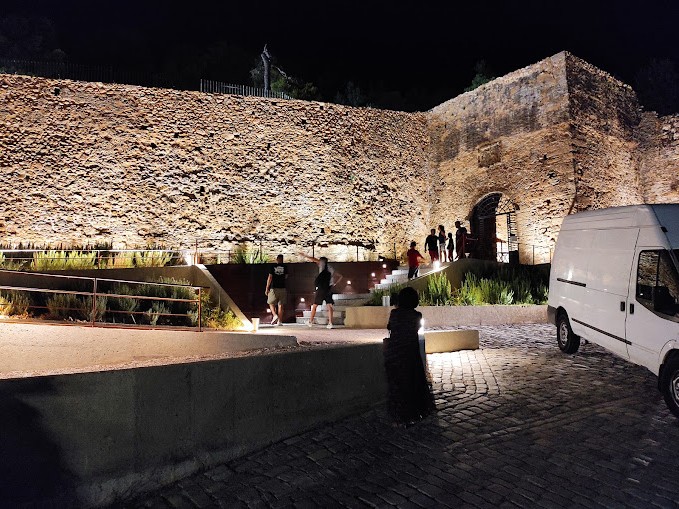
Above the river Nedontas, in the northwestern part of the city, you will find the beautiful castle of Kalamata. Although it was founded during the Byzantine period, its current form is due to a major reconstruction by the Frankish prince Godefroid I Villeardouino, at the beginning of the 13th century. During the 18th century the castle of Kalamata loses its strategic importance, while it has already been abandoned since the beginning of the 19th century. The vandalism of the castle was a relatively frequent phenomenon as the Venetians who occupied it from 1685 to 1715 proceeded with conversions, while in 1825 it suffered great destruction from Ibrahim’s army. Findings have been found in the Castle of Kalamata which prove that the city of the ancient Lighthouses was located there. In this place, in the 6th century AD, a small church dedicated to Panagia “Kalomata” was built. It was named so because the icon of the Virgin dedicated there had beautiful, black eyes. From her it is said that the region got its next name, Kalamata. The 1986 earthquake made many parts of Kalamata Castle dangerous, so its center is no longer open to visitors. The visitor can only tour around the perimeter, inside the castle and enjoy a wonderful view towards the historical center of Kalamata. Telephone +30 2721063100 (EFA Messinia) Ticket Prices Whole: €3 Reduced: €2 Single Ticket: €15 – Duration 3 days, and valid for: Nestor’s Palace, Archaeological Museum of Messinia, Archaeological Museum of Chora, Kalamata Castle, Methoni Castle, Pylos Castle (Niokastro), Troupakidon – Mourtzinon Fortress Complex. Opening Hours Daily: 08:30 – 15:30 Tuesday: CLOSED
Castle of Koroni
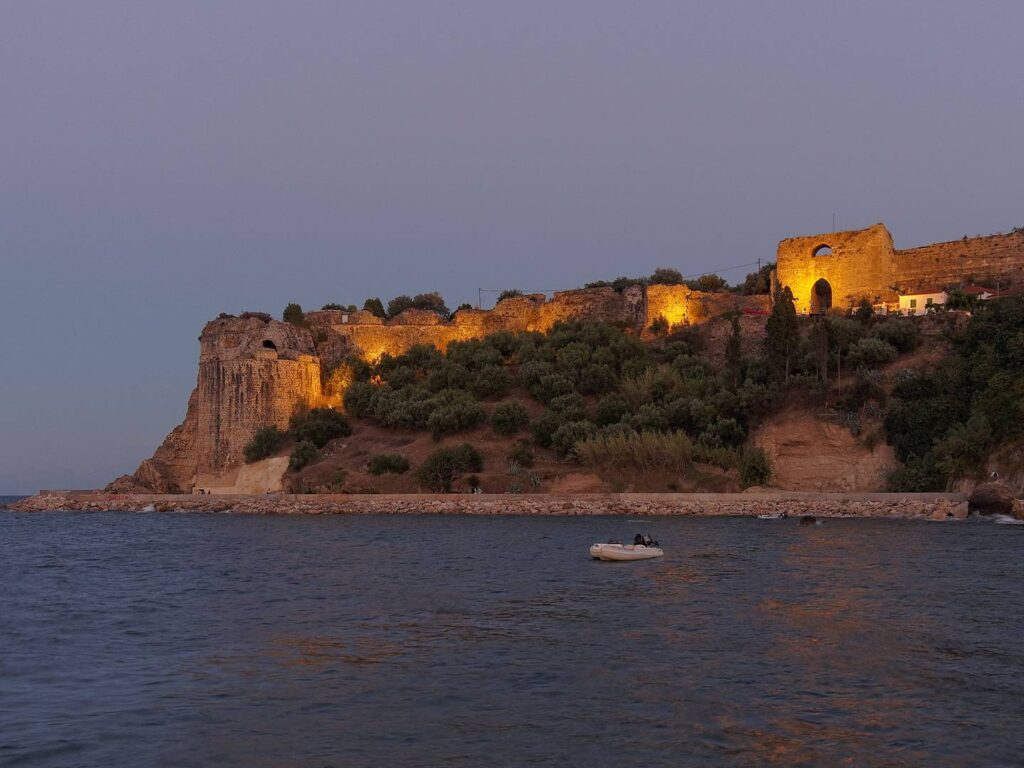
The Castle of Koroni dominates the beautiful town of Koroni and is truly magnificent. It is one of the most famous castles in our country and it is still inhabited today! Inside the castle there is a small settlement with private houses and occupies an area of 62 acres. It was built at the end of the 13th century, by the Venetians, on the ruins of a Byzantine fortress. In August 1500, it was occupied by Sultan Bayezid II and the inhabitants of Koroni, having been terrified by the event, surrendered to the Ottomans. Then, in 1715, the castle came under the control of the Ottomans, where Ottoman families settled, while the Greek Orthodox lived outside the walls. In 1770, the castle was bombed by the Orloff brothers. Afterwards, the church was converted into an Ottoman mosque and in more recent times, an Orthodox church. At the western end of the castle the visitor can see the Monastery of the Holy Cross which was founded at the beginning of the 20th century. An octagonal tower is preserved within the monastic enclosure. It was built during the Turkish occupation and is the highest point of the castle. Inside the Crown Castle, several carved tombs, underground vaulted cisterns for collecting rainwater, a Turkish hammam, Venetian cisterns, as well as the so-called Resalto are also preserved. It is a marble column in memory of the Greeks who fell on February 28, 1824, who tried to capture the castle from the Turks, but met a tragic death. If you visit Koroni, its castle is truly a visit you shouldn’t miss as, in addition to all of the above, the view it offers from above is simply magnificent! Opening Hours The castle can be visited any day of the week from morning to sunset. Ticket Prices Free entrance
Castle of Kyparissia
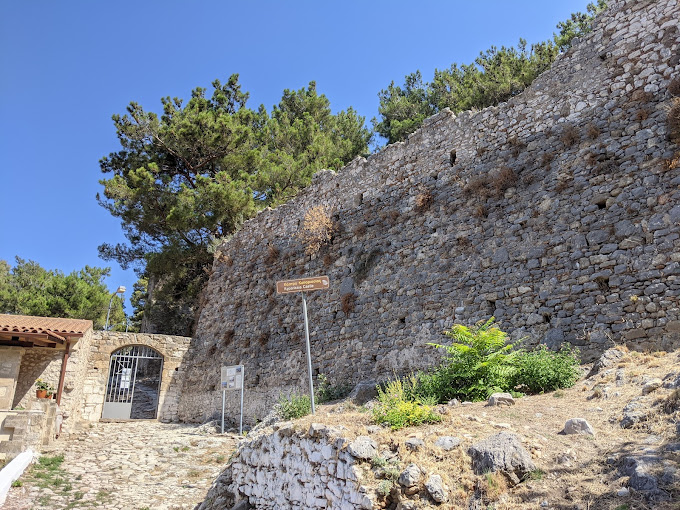
Or otherwise, the “Castle of the Giants”. The stones from which it was built were of enormous dimensions, some with a length of 4m. and 1.64m wide. and some others with a length of 1.38m. and 1.80 m wide, which is why the Castle was considered to have been built by the Giants of mythology. The ancient acropolis was located in the place where the castle is today. A Byzantine fortress was built on top of this ancient city. During the Middle Ages, the area was called Arcadia by the many Arcadians who fled there due to Slavic raids in their area and the Castle of Cyparissia was called “Castle of Arcadia”, a name it retains to this day. In the following centuries, the castle of Kyparissia suffered many destructions and reconstructions by the conquerors, Turks and Venetians. In the 70s, a small amphitheater was built inside the castle of Kyparissia, which hosts cultural events during the summer months. The view that the visitor will enjoy from above is truly memorable! Telephone +30 2721022534 (EFA Messinia) Opening Hours Daily: 08:30 – 15:30 Tuesday: CLOSED
Castle of Methoni
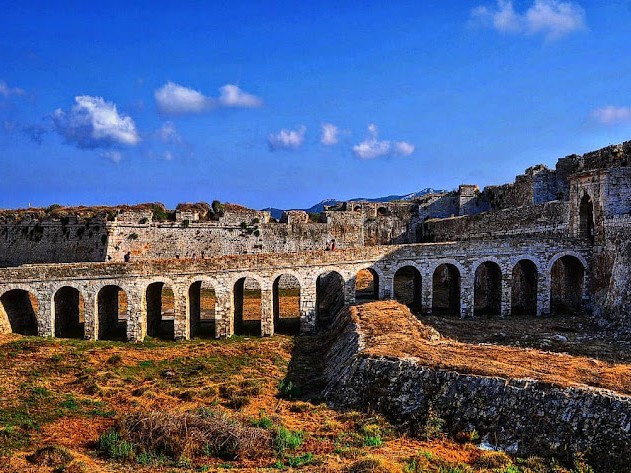
With an area of approximately 93 acres, the castle of Methoni was built in 1209 by the Venetians on a rock that juts into the sea and is separated from the land by an artificial moat and is one of the most imposing castles in Greece. Among the most impressive parts of the castle are the bridge that connects it to the mainland and its gate decorated with reliefs. The stone bridge of fourteen arches was built over the moat by the technicians of the Expedition scientifique de Moree, accompanying General Maison, in 1828. Inside the Castle of Methoni are preserved ruins of the houses in which the Venetian lords lived during the heyday, the paved road that led to the Sea Gate, the ruins of a Turkish bath, the Byzantine church of Agia Sophia, near which was found a slab with Latin letters (dating to 1714) and many more wonderful architectural exhibits. Telephones +30 2723028758 (Home office) +30 2721063100 (EFA Messinia) Ticket Prices Whole: €3 Reduced: €2 Single Ticket: €15 – Duration 3 days, and valid for: Nestor’s Palace, Archaeological Museum of Messinia, Archaeological Museum of Chora, Kalamata Castle, Methoni Castle, Pylos Castle (Niokastro), Troupakidon – Mourtzinon Fortress Complex. Opening Hours Daily: 08:30 – 15:30 Tuesday: CLOSED
Castle of Mila
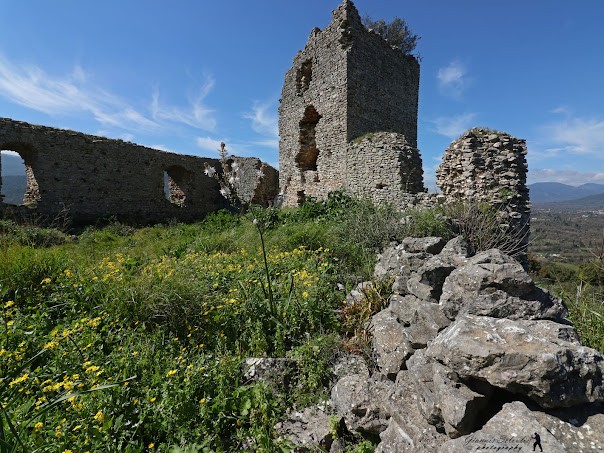
Built at a point of strategic importance for the control of the Messinian Gulf to the north and at an altitude of almost 300m, the castle of Mila is a small fortress, built by the Franks. The Castle of Mila has been identified with Chateaunef which is said to have been founded by Isabella Villeardouinou (1297-1301) to face the attacks of the Greeks of the Despotate of the Morea, while a second version, supported by many, wants the Castle to be the work of Nicollo Acciaiuoli from 1338 to 1341. Its high two-story towers are characteristic of a late Frankish period and remind, in particular, the surviving square tower of the Androusa Castle. It may be relatively small, but the view from above will fill your field of vision with a vast green that reaches to the horizon. The area is freely accessible at any time of the day.
Castle of Safflauros
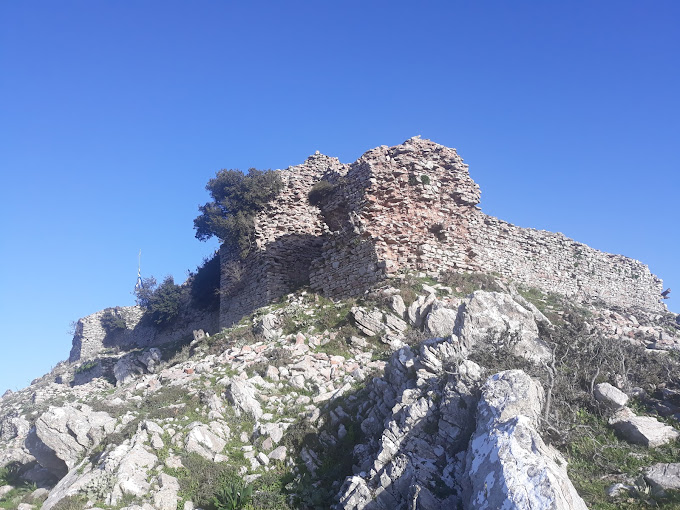
The Castle of Saflauros, or Lanjunatos Castle, is considered a fortress of the Byzantine-Post-Byzantine period and was built at the end of the 13th or the beginning of the 14th century. Its name is thought to come from San Flauro, which means Saint Flour. As the first lord of the castle, it is rumored that he was Nicolas Le Maure, the same one who had imprisoned Margaret of Villeardouin in Chlemoutsi, in 1315. Between 1460 and 1469, the Castle was under Turkish administration and during this period, it probably suffered the most damage. Inside, a long vaulted building is preserved, while the outer enclosure has collapsed in its greater part. Finally, although relatively small, the castle of Saflauros is considered to have been one of the most important in Messinia for the Byzantines, as it is reported that Constantine Palaiologos took it from his brother Theodoros II, shortly before he was proclaimed Despot of the Despotate of Mystras, in 1443. The area is freely accessible at any time of the day.
Fairy Tale Castle
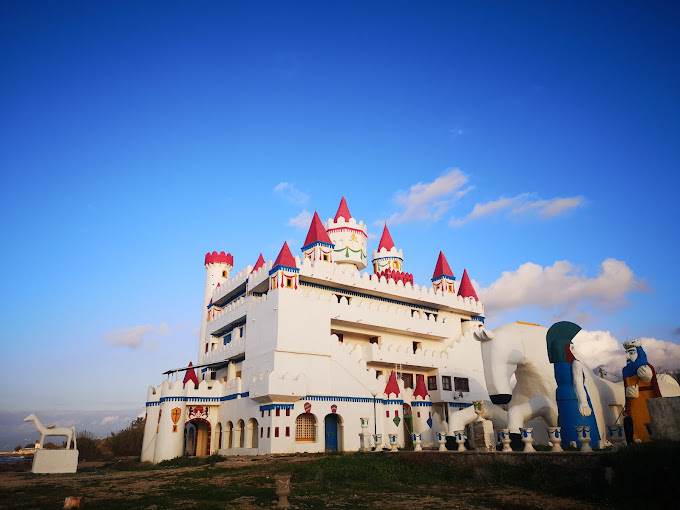
Perhaps one of the most important attractions in Filiatra is the fairytale castle. A magnificent castle, built in the 1960s, which is the work and gift of local doctor and sculptor Harry Fournier, whose real name was Charalambos Fournarakis. A real gem right by the sea, which is unfortunately not so well maintained these days. The outside of the castle is decorated with scenes and statues from Greek mythology, such as the huge figures of Poseidon and Athena, but also heroes of the Revolution of 1821 together with knights. On the side of the castle is a large, impressive building in the shape of a horse, like the Trojan Horse, which used to house a library. Characteristic is the sign which reads: “…to remind us all, so with his theory, of the fairy tales that our grandmother sweetly told us”. The area is freely accessible at any time of the day, there is no ticket and it is easily accessible.
Railway Park of Kalamata
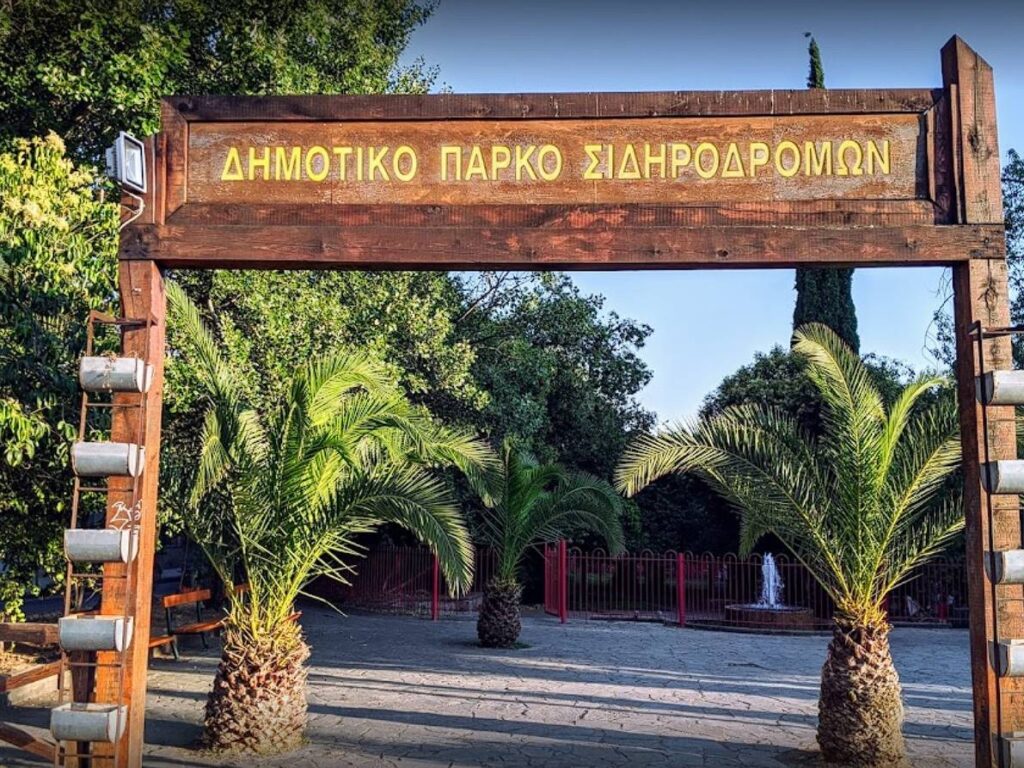
The Municipal Railway Park in Kalamata is known to all friends of Railways around the world. Its area is 54 acres and it is located in one of the most central parts of the city. There you will have the opportunity to see the “Kalamata-Limin” railway station and its area, with a two-story stationmaster’s hut, four boarding platforms with an entrance kiosk, three steam locomotive cranes and wheelhouses, a magnificent metal footbridge, 28 m long, and many many more. Seven steam locomotives and one diesel locomotive, a manual crane from 1890, two draizins (one bicycle and one manual), three 1st class and five 1st-2nd class passenger vehicles from 1885 are on display in the Railway Park. If you have children with you, the Railway Park has a basketball and volleyball court and operates a snack bar on the ground floor.